

Tuning a Master Kinase: How CaMKII variants are deployed and degraded
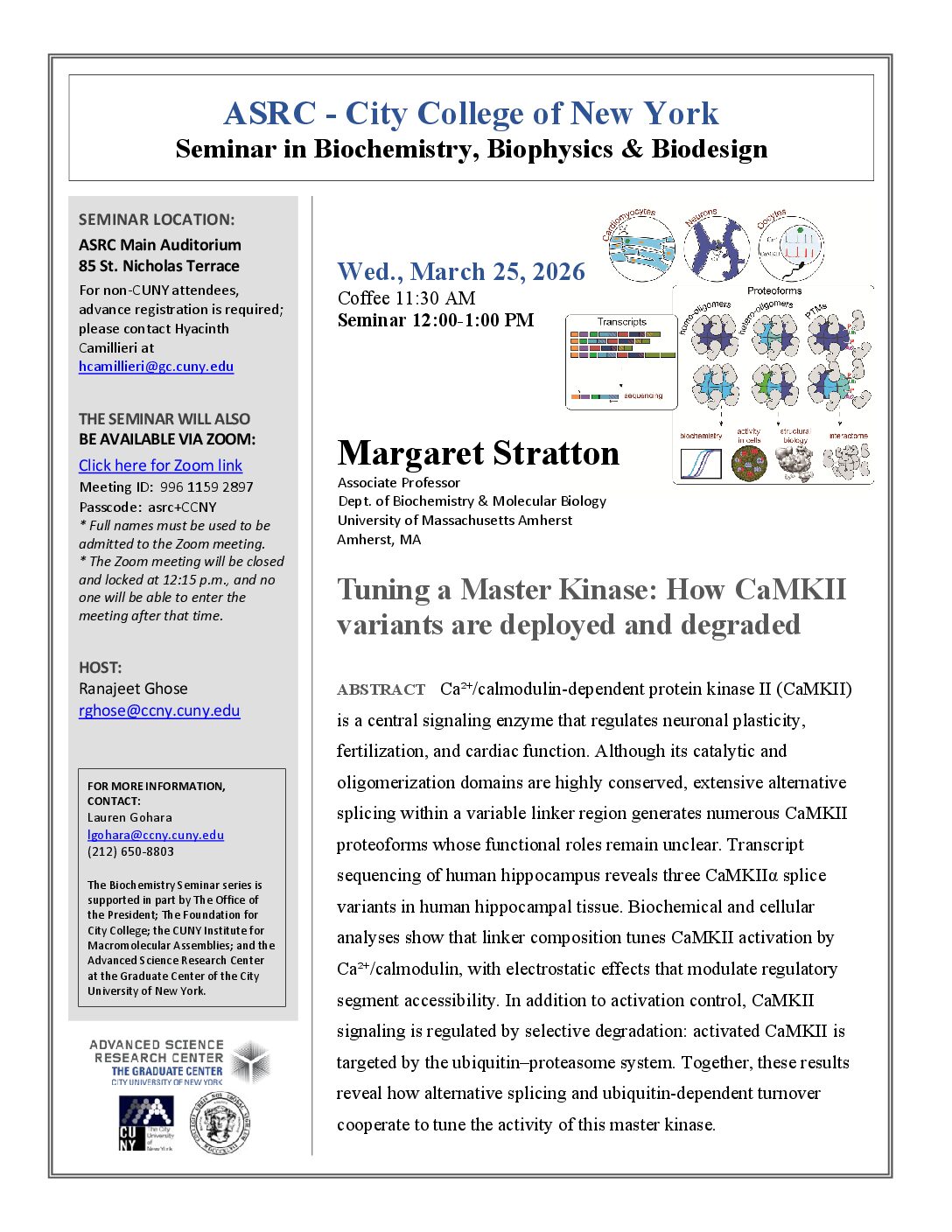
Ca²⁺/calmodulin-dependent protein kinase II (CaMKII) is a central signaling enzyme that regulates neuronal plasticity, fertilization, and cardiac function. Although its catalytic and oligomerization domains are highly conserved, extensive alternative splicing within a variable linker region generates numerous CaMKII proteoforms whose functional roles remain unclear. Transcript sequencing of human hippocampus reveals three CaMKIIα splice variants in human hippocampal tissue. Biochemical and cellular analyses show that linker composition tunes CaMKII activation by Ca²⁺/calmodulin, with electrostatic effects that modulate regulatory segment accessibility. In addition to activation control, CaMKII signaling is regulated by selective degradation: activated CaMKII is targeted by the ubiquitin–proteasome system. Together, these results reveal how alternative splicing and ubiquitin-dependent turnover cooperate to tune the activity of this master kinase.
Please use this link to access Zoom.
For any questions, please contact Hyacinth Camillieri at hcamillieri@gc.cuny.edu